Who are we?
How would you describe the personality of LED?

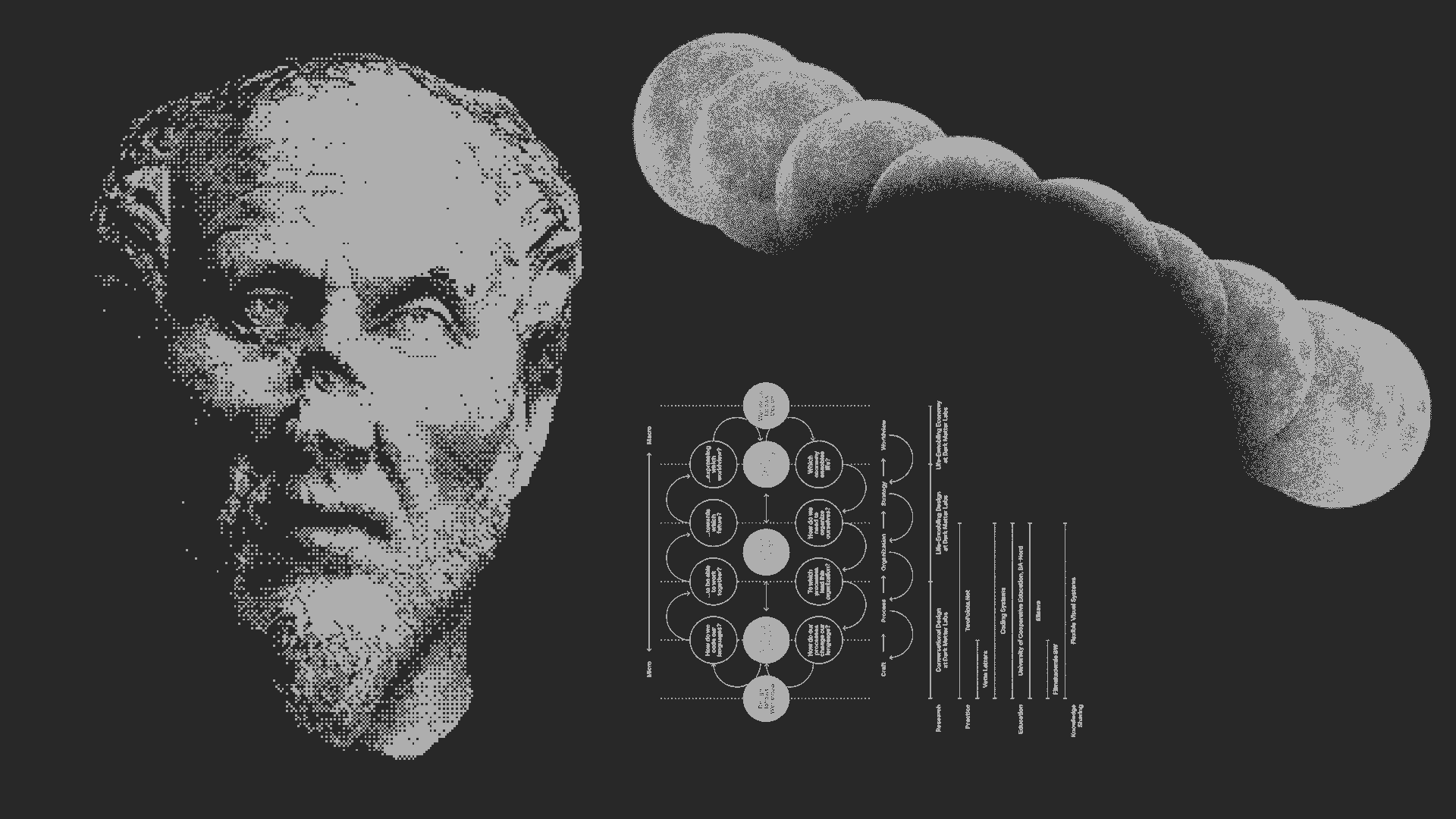
In this reflection we are sharing the thinking behind LED’s evolving personality (or identity if you are a designer!). If you click on the LED Homepage you will notice that we have a collage banner instead of a logo or fixed visual identity. Why is that?
Designing a visual identity for LED felt almost wrong. We want to use design as a relational craft. We don’t understand it as a product or a service, instead we see a tool to weave and visualise the unseen. It is an invitational space to explore relationships; with ourselves, our families, colleagues, communities and ultimately with the cosmos. We know relationships are fluid, shifting and often surprising. For this reason, we have chosen a collage that we can update each month to reflect LED’s evolving perspectives and relationships.
All models are wrong, some are useful, others are fantasy
LED has a strong purpose: we are working to shift towards life-ennobling economies that are in service of life. It also has a clear call to action: we want to use the relational craft of design to scaffold trans-disciplinary conversations and action. The goal is for each profession (designers and non-designers) to play their part in fundamentally reconfiguring our societal deep codes. Our offering is probably less clear. How do we propose to do that? Do we have a sharp model or framework? A serious sounding methodology for the process? Could we pitch the ‘product’ to a funder or investor?
Probably not. But if that was the case, would you still be interested? Or would something seem off?
Is emptiness a language in its own right?
It would have been easy to invent a methodology, give it a good-sounding name, and make it look serious. As a designer and an economist, we are well placed to make things appear valuable, to turn abstractions into money and to craft a story of legitimacy. Yet it would be just another fantasy. We are consciously choosing to offer spaces to be filled, because we see emptiness as an invitation for imagination. This applies equally to the empty banner that we fill each month, to our publications and to the spaces that we offer for engagement.
Breaking out of the dissonance
Through workshops and publications, we help non-designers to use design as an additional language. We encourage them to look at their own profession through fresh eyes and to use their craft as a tool to redefine their work. Faced with crippling dissonance and a growing awareness that most professions are contributing to the polycrisis people feel helpless. Some feel the only option is to leave their jobs. Others would like to, but are locked in by commitments and responsibilities. What if we thought about this differently? What if the most ennobled thing each of us can do is to use our experience and skill to redesign the exact profession that we are already working in?
Who are we? What is ours to do?
By refusing to focus on a single profession we are starting to uncover repeating patterns and stimulate transdisciplinary responses.
These patterns, or societal deep codes, are the dark matter that influences everything but hides in the shadows. In 205 CE the ancient philosopher Plotinus was born and posed the ultimate question for humanity: "But we......who are we?" In 2025 we are asking a similar question: "Who are we and what does that mean for the stewardship of our planetary home?". Plotinus talked about the One, a relational field (or “light”) that supersedes and precedes all that exists. We can’t change the fabric of reality, but can we shift the patterns of the light and shadows through the things that we build? How do we coordinate the distribution of light? Do we care for the ones we cast a shadow on? Like big trees sharing nutrients with smaller plants living in the shadows? Are we aware that we share the same soil?